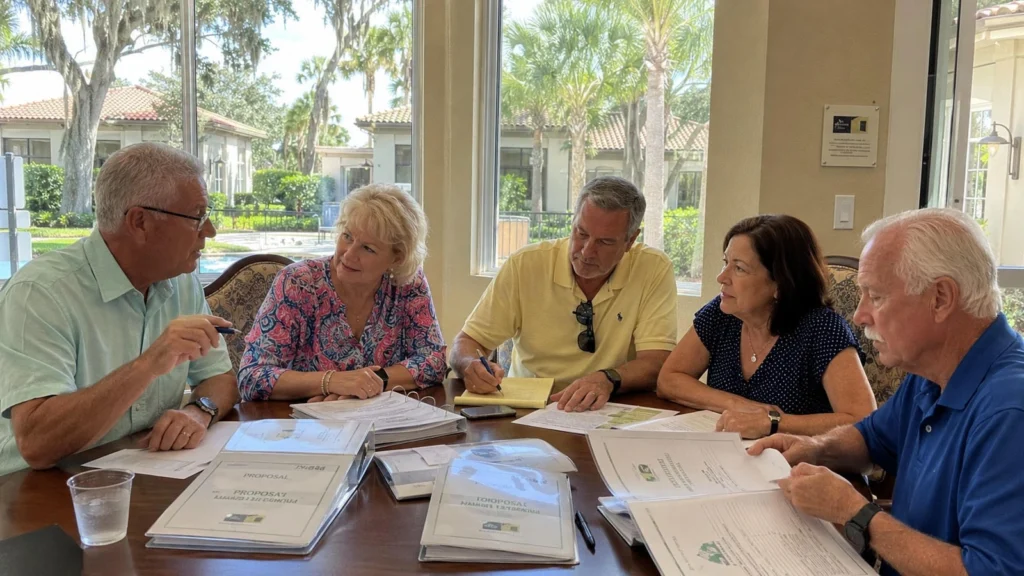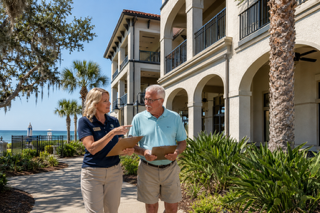
After a hurricane, a Florida board works in three phases: secure and document the property within the first 72 hours, report the claim and stabilize operations within the first 30 days, and then manage repairs and funding over the first 90 days. Two clocks govern. Statutory emergency powers require a declared state of emergency, and a claim must be reported to the insurer within one year of the date of loss; supplemental claims are barred after 18 months.
Preparation gets the attention. Recovery is where boards get stuck.
Hurricane preparation checklists are common. Recovery plans are less so, and recovery is the harder problem. Preparation is a list of tasks with a deadline. Recovery is a sequence of decisions made under pressure, with damaged property, anxious owners, a phone that will not stop, and a vendor market where the good contractors are booked by Wednesday.
The sequence below is the operational version. It is written for the board, not the manager, because the decisions that matter in the first week are the board’s.
What happens in the first 72 hours?
Determine what is safe before you determine what is damaged
The first decisions are access decisions. Which buildings, amenities, garages, and common areas are safe to enter, and who is qualified to say so. Florida’s emergency powers statutes give boards authority here, and they specifically tie that authority to professional judgment rather than the board’s own read of the building. The condominium provision frames these determinations as based on the advice of emergency management or public health officials, or of licensed professionals retained by, or otherwise available to, the board. The homeowners association provision is similar in structure.
Practically: get an engineer or a licensed professional on the property before you reopen anything structural, and document who made the call and when.
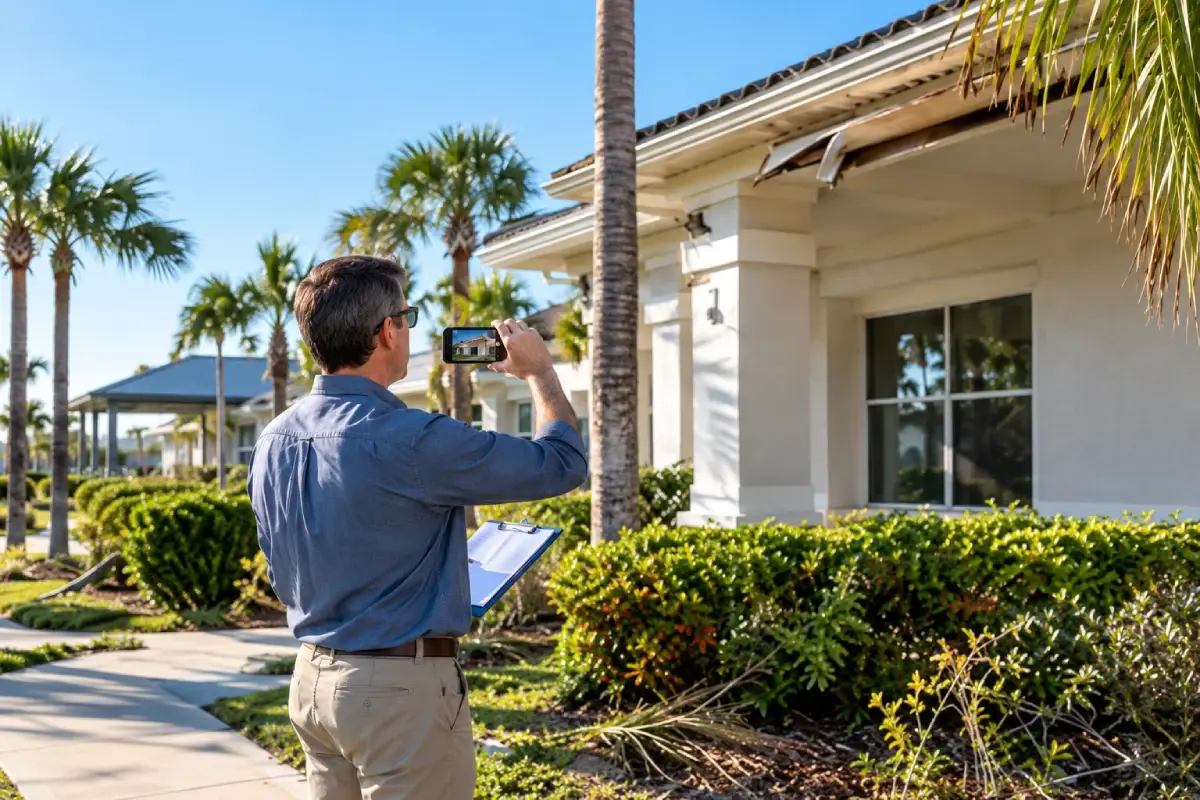
Document before you clean up
This is the step boards most often compress, and it determines how much of the loss the claim file can support. Before debris removal begins, capture the condition of the property: photographs and video with timestamps, wide shots and close-ups, unit-adjacent common-element damage, roof and envelope, mechanical spaces, and the water line if there was flooding. Save the pre-storm photos too, if the community has them.
Cleanup destroys evidence of the loss. Once the wet drywall is in the dumpster, the record of what it looked like is whatever the association captured.
Get a message out, then keep a cadence
Owners will fill silence with speculation. A short, factual first message beats a comprehensive one sent three days later. Say what is known, what is unknown, what is unsafe to enter, and when the next update will come. Then hold that cadence, even when the update is that nothing has changed.
Under both emergency powers statutes, associations may give notice in whatever manner is practicable after a declared emergency, including posting on the property, by email, and on the association’s website. That flexibility exists because normal notice mechanics break in a storm.
What emergency powers does a Florida board have?
Florida gives association boards a defined set of emergency powers, and boards are frequently surprised by both how broad those powers are and by what triggers them.
The trigger is a declared state of emergency. Section 718.1265, Florida Statutes applies to condominium associations in response to damage or injury caused by, or anticipated in connection with, an emergency for which a state of emergency is declared under s. 252.36 in the locale where the condominium is located. Section 720.316 provides parallel authority for homeowners associations. Without the declaration, the board is operating under its ordinary powers and its governing documents.
Note the phrase “or anticipated in connection with.” Ask your association’s attorney what that language means for actions your board wants to take before landfall rather than after.
The powers are broad and operational. Under s. 718.1265, a condominium board may conduct board meetings, committee meetings, elections, and membership meetings in whole or in part by telephone or real-time videoconferencing with notice given as is practicable; cancel and reschedule meetings; name assistant officers who are not directors to cover for unavailable officers; relocate the association’s principal office; enter agreements with counties and municipalities for debris removal; implement a disaster or emergency plan before, during, or after the event, including shutting down elevators or utilities; determine portions of the property unavailable for entry; require evacuation under a mandatory evacuation order; determine whether the property can be safely inhabited, accessed, or occupied; mitigate further damage, including removing wet drywall, insulation, carpet, and cabinetry; contract on behalf of owners for items necessary to prevent further damage, with reimbursement enforceable through the association’s lien authority; levy special assessments without an owner vote; and borrow money and pledge association assets to fund emergency repairs when operating funds are insufficient.
Determinations about access and habitability are tied to advice from emergency management or public health officials, or from licensed professionals retained by or otherwise available to the board. The statute also notes that a determination made under this section is not the final word on habitability. Your attorney can explain how it interacts with your governing documents.
There is a limit on restricting access that boards should know before they need it. Subsection (3) of s. 718.1265 provides that during a state of emergency declared by the Governor, an association may not prohibit owners, tenants, guests, agents, or invitees from accessing the unit and its appurtenant common elements and limited common elements for ingress and egress, and when access is necessary in connection with the sale, lease, or transfer of a unit, or the habitability of the unit or the health and safety of the person, unless a governmental order or determination or a CDC public health directive prohibits that access. Reasonable association restrictions still apply. Boards that assume a blanket closure is available to them after a storm should read this subsection with their attorney first.
HOA powers are comparable but not identical. Section 720.316 gives homeowners association boards broadly similar authority, tailored to the HOA context. Florida practitioners commonly note two differences: HOA boards do not carry the condominium provision on requiring evacuation, and do not have the same authority to contract on behalf of individual owners for items those owners are otherwise responsible for. Confirm how s. 720.316 applies to your community with your association’s attorney.
The powers are bounded three ways. They are limited to the time reasonably necessary, limited to what is reasonably necessary to protect health and safety and mitigate further damage, and limited by the association’s recorded governing documents where those documents specifically prohibit the action.
This is a summary of what the statutes authorize operationally. Which powers your board can use, and how, depends on your governing documents. Work through that question with your association attorney before you need the answer, not after.
How fast does the insurance clock run?
Faster than most boards expect, and the deadlines are not the ones people remember from a decade ago.
Under s. 627.70132, Florida Statutes, a property insurance claim or reopened claim for loss or damage caused by any peril is barred unless notice was given to the insurer, per the policy terms, within one year after the date of loss. A supplemental claim is barred unless notice is given within 18 months after the date of loss. A supplemental claim means additional loss or damage from the same peril on a claim the insurer already adjusted, or for which costs were incurred while completing repairs under an open claim.
Three details in that statute matter operationally to a board.
The date of loss is defined. For hurricanes, tornadoes, windstorms, severe rain, and other weather events, the date of loss is the date the hurricane made landfall, or the date the event is verified by NOAA. The clock does not start when the board notices the damage.
Loss assessment coverage runs on a different timeline. For a notice of claim under loss assessment coverage per s. 627.714, the statute sets an outside limit of three years after the date of loss and requires notice by the later of one year after the date of loss or 90 days after the association’s board votes to levy an assessment resulting from a covered loss. Condominium boards weighing a loss assessment should have the 90-day trigger in view at the meeting where the vote takes place.
The 18-month supplemental deadline is the one that catches communities off guard. Large association losses reveal themselves in stages: the roof claim settles, then the restoration contractor opens a wall and finds more. Past 18 months, that additional damage has no path back through the original claim.
Two operational implications. Report early, even on damage still being assessed. And keep the repair timeline visible against the claim timeline, so the board sees the 18-month date coming rather than discovering it.
Your broker handles the policy and the claim strategy. A public adjuster or your attorney may be involved on larger losses. The management company’s role is documentation, coordination, and keeping those dates in front of the board.
Who is responsible for repairing what?
This question creates significant owner friction and does not have a general answer. Responsibility for damage inside a unit versus the common elements, and the interaction between association coverage and owner coverage, is set by your declaration and by the statutory framework that applies to your community type.
The operational move is to settle the question once, in writing, before owners start asking individually. Have your association attorney confirm how your declaration allocates responsibility for the specific damage types your community sustained, then publish that allocation to owners in plain language, once, with the same answer going to everyone.
The alternative is answering it forty separate times, slightly differently each time.
How should a board select vendors in a storm-recovery market?
Storm recovery draws contractors into the market who were not there the week before. A few operational guardrails:
Use the bench you already have. Vendors with an existing relationship with the community, current licenses, and current insurance certificates on file are the first to be called. This is the return on maintaining a vendor list during quiet months.
Verify licensing and insurance before work begins, not after. Contractor licenses are verifiable through the DBPR. Certificates of insurance should name the association and be current on the date work starts.
Get scope in writing, even under time pressure. Emergency work often begins with a verbal authorization. Follow it with a written scope and a not-to-exceed figure within days.
Watch for assignment of benefits language. Read what a contractor asks the association to sign regarding insurance proceeds and route anything unfamiliar to your attorney and broker before signature.
Document what each vendor did and when. The insurance file and the eventual owner questions both run on this record.
What does the first 90 days look like?
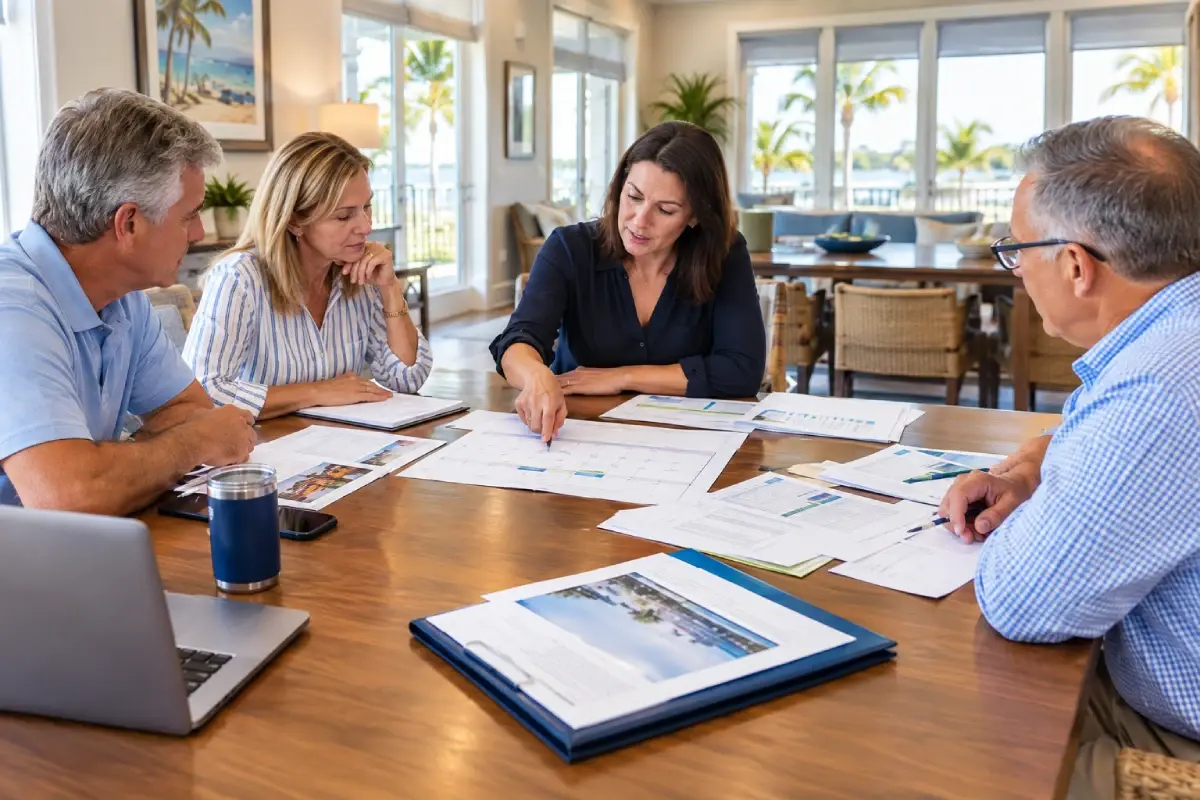
Weeks 1 to 2. Safety determinations and access decisions. Documentation. Claim reported. Emergency mitigation is underway. First owner communication and a stated update cadence. Emergency board meeting under the notice of flexibility the statutes allow.
Weeks 3 to 6. Adjuster inspection completed. Scope of repair defined with the contractors. Funding questions answered: what comes from insurance, what from reserves, what from an emergency special assessment or borrowing, and what timeline. Owner communication moves from status updates to plan and cost.
Weeks 7 to 12. Repairs sequenced and underway. Change orders tracked against the claim. The 18-month supplemental claim date entered on the board calendar. Budget impact assessed for the current and following fiscal year, including whether reserves drawn down for the storm need a replenishment plan.
Then the part boards skip: a written debrief while the details are fresh. What worked, what was missing, which vendor came through, and which contact list was out of date. That document is worth more next June than any checklist downloaded from the internet.
What about FEMA and SBA?
Worth understanding before the question comes up at a meeting, because the common assumption is wrong.
FEMA’s Individual Assistance program does not cover damage to association common areas. Individual owners may apply for assistance for their own eligible losses, but that program does not cover the association’s common element damage.
The U.S. Small Business Administration disaster loan program does accept applications from homeowner and condominium associations. SBA disaster loans are one of the funding paths available to associations for uninsured or underinsured common area losses, alongside insurance proceeds, reserves, special assessments, and association borrowing.
Whether that path makes sense for a given community is a financial decision for the board with input from its advisors. Knowing it exists changes the conversation about how to fund a shortfall.
What should be settled before next season?
Recovery ends where preparation begins. The items worth confirming in the quiet months:
- Vendor contact list current, with licensing and insurance verified.
- Pre-storm photo documentation of common areas refreshed annually.
- Insurance appraisal current, and the board is clear on what the policy covers.
- Emergency contact information for owners is current in the association’s system.
- Governing document responsibility allocation reviewed with the attorney and understood by the board before it is needed.
- Reserve position understood, including how much is truly available for an emergency draw.
- A named decision-maker and a stated communication cadence agreed in advance.
Let’s talk about your community’s storm readiness and recovery plan. MAY Management Services has managed Florida communities since 1988, through the storms that came with them. 200+ communities, 27,500+ homes, five offices across ten Florida markets, and a 98% client retention rate. Contact us to review how your board would handle the first 72 hours.